
posted 6th November 2026
It's about more than just being given a training plan
If you've ever thought about getting a running coach, you might have wondered what happens once you sign up.
Do you simply get sent a training plan every week, follow the sessions and report back on how you've done?
Well, there's a little more to it than that.
I think one of the biggest misconceptions about running coaching is that it's simply about having somebody tell you how far to run, how fast to run and which days to do it.
Of course, planning your training is a big part of what I do. But for me, that's only one piece of the picture.
Every runner I work with has a different story. Some are relatively new to running and want to build towards their first 5K or 10K. Others have been running for years and are looking to improve their half marathon or marathon times. Then there are those who want to take on their first ultra or perhaps finally achieve a personal best they've been chasing for a while.
The goals might be completely different, but the starting point is always the same.
I need to understand the person behind the running shoes before I can start deciding what their training should look like.
And that's where coaching really begins.
So, where do we start?
Before I start putting sessions into TrainingPeaks, I want to know a little about you.
What are you hoping to achieve? How long have you been running? What have you done previously? Have you raced before, or are you just starting to find your feet?
Perhaps you've been running for a couple of years but feel you've stopped making progress. Maybe you can comfortably run 10K but struggle when you try to increase the distance. Or perhaps you're someone who has completed several marathons but knows there's more potential there if you can get your training right.
We'll talk about all of that.
I'll also want to understand how much time you realistically have available. There's no point me writing a brilliant five-day training programme if your work and family commitments mean you can only manage three sessions most weeks.
And this is something I think sometimes gets overlooked.
Your training doesn't happen in isolation. You still have a job to go to, family commitments, social lives and all the other things that make up everyday life.
Some weeks you'll sleep well, feel great and be ready to tackle everything I've put in front of you. Other weeks might be completely different.
We'll also look at your injury history, current training, strengths and weaknesses, and whether there are particular areas of your running that need attention.
The idea isn't to find fault with everything you're doing. It's to understand where you are now and work out what is most likely to make a difference.
You don't need to be particularly fast, experienced or even confident in your running to start this process.
You just need to have something you'd like to work towards.

Building a plan that actually fits your life
Once I've got a better understanding of you and what you're hoping to achieve, we can start putting your training programme together.
This is where the science, experience and planning come into play, but there's no point making things unnecessarily complicated.
Your programme needs to give you the training stimulus required to improve, but it also needs to be something you can realistically follow.
For one runner, that might mean three carefully planned sessions each week. For another, it could involve five or six sessions, including some additional strength work.
There's no magic number of sessions that works for everybody.
We'll look at how to balance your easier runs, longer runs and quality sessions, and decide where things such as intervals, tempo running, threshold work, hills and race-pace training fit into your programme.
We'll also consider strength and mobility work where appropriate.
And importantly, every session needs to have a reason for being there.
An easy run might be helping to develop your aerobic endurance and allowing you to recover from a harder session. A threshold workout could be developing your ability to maintain a stronger pace for longer. A longer run might be preparing you for the demands of a half marathon, marathon or ultra.
It's not about making every session hard or trying to squeeze as much training as possible into your week.
In fact, sometimes the best thing you can do is slow down a little.
One of the things I want to avoid is building a programme that looks fantastic on paper but becomes increasingly difficult to follow after a few weeks.
Training needs to progress at a sensible rate. Your cardiovascular fitness might improve quite quickly, but your muscles, tendons and other structures need time to adapt to the repeated impact of running.
Getting that balance right is important.
And if something unexpected happens, we'll adjust things. A particularly busy week at work, family commitments, poor sleep or simply feeling a little under the weather can all influence what you should be doing.
I don't expect life to stop because you've decided to train for a race.
Your training should fit around your life, not the other way around.
What happens once the training starts?
This is probably the part of coaching I enjoy most, because this is where we start to see how things are developing.
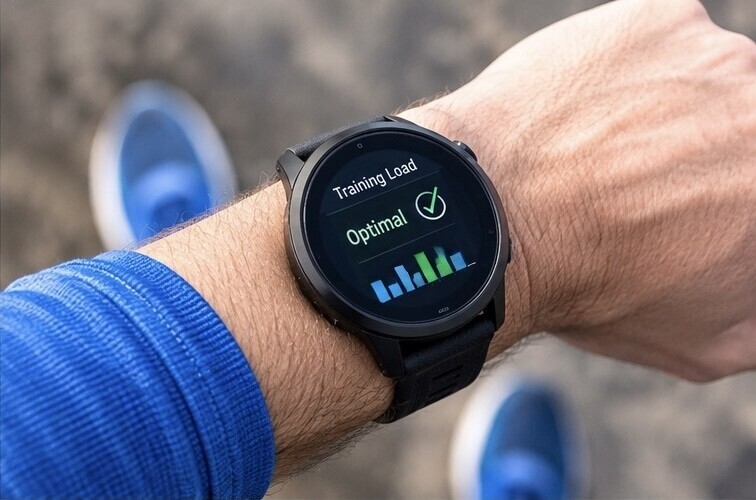
I use TrainingPeaks to deliver your programme and review your completed sessions. It gives us a useful picture of what's happening with your training, from pace and heart rate to distance, duration and other relevant information.
But here's something worth remembering.
The numbers don't tell me everything.
You might complete a session exactly as planned, with all the right numbers appearing on the screen. But that doesn't necessarily mean it was a good session.
Perhaps you slept badly the night before. Maybe work has been particularly stressful, or you've been carrying some fatigue from the previous few days.
On the other hand, you might finish a session feeling much better than expected, even though the numbers don't look particularly impressive.
That's why I place so much importance on communication.
I want to know how you're feeling, what you're finding difficult and what's going well. The feedback you give me is just as important as the information coming from your watch.
We can then put the two together and make better decisions about your training.
Sometimes we'll look at your progress and decide that everything is going in the right direction. We simply need to keep doing what we're doing.
At other times, we might need to change something.
Perhaps your easy running is becoming more comfortable, but you're struggling to recover between harder sessions. Maybe you're carrying a little too much fatigue, or perhaps a particular workout isn't producing the response we'd hoped for.
That's all part of the process.
I don't see a missed session or a difficult training week as some sort of failure. We're not machines, and training doesn't always go exactly to plan.
Good coaching is about recognising what's happening, understanding why it might be happening and deciding what to do next.
Sometimes that means pushing forward. Sometimes it means backing off.
Knowing the difference is important.

Getting you ready for race day
There's another part of coaching that I think deserves just as much attention as the training itself.
And that's being able to use the fitness you've developed when you get to the start line.
How many times have you seen somebody set off at a race as though they're being chased, only to see them struggling a few miles later?
Perhaps you've done it yourself.
You feel fantastic at the start, the atmosphere gets you going, everybody around you seems to be running at a great pace and before you know it, you've gone off much quicker than you intended.
It happens to plenty of runners.
But race day is about more than just being fit enough to cover the distance. It's about understanding how to manage your effort and making sensible decisions along the way.
For a 5K runner, that might mean learning how to distribute your effort and finding the confidence to hold a challenging pace without going off too quickly.
For a half marathon or marathon, we'll need to think about pacing, endurance, race-pace preparation and fuelling.
And if you're taking on an ultra, there are other things to consider, including managing fatigue, fuelling over several hours and dealing with the particular demands of the course.
A flat road marathon and a hilly trail ultra are very different challenges. Your preparation needs to reflect that.
We'll work towards developing a race strategy that makes sense for your current fitness and the event you're preparing for.
Of course, you can't control everything on race day. The weather might be against you, the course might be tougher than expected or you might simply have one of those days when your legs don't quite feel as you'd hoped.
But you can prepare for those situations and understand how to respond when things don't go exactly to plan.
The aim is to get you to that start line knowing you've prepared as well as you possibly can.
It's about more than getting faster
Something I really want my athletes to take away from coaching is a better understanding of their own running.
I don't want you simply following a list of sessions without knowing why you're doing them.
I'd much rather you understand what we're trying to achieve, how your body is responding and what we're looking to improve over the coming weeks and months.
You might discover that your biggest opportunity for improvement isn't running more miles. It could be improving your pacing, developing your aerobic endurance, introducing some structured speed work or becoming more consistent with your training.
And sometimes, it might simply be learning when to ease back rather than trying to push through every difficult session.
There isn't one training formula that works for everybody.
I've spent many years working with people from very different backgrounds, abilities and personalities, and one thing I've learned is that you can't approach everybody in exactly the same way.
The same applies to running.
What works brilliantly for one runner might not be appropriate for another. That's why I believe coaching needs to be built around the individual, rather than trying to squeeze everybody into the same training approach.
Ultimately, I want you to become a stronger, more confident and more knowledgeable runner, not somebody who feels they need a coach to make every decision for them.
Do you actually need a running coach?
That's a fair question.
There's an enormous amount of running information available online these days. You can find training plans for pretty much every distance, watch videos explaining different workouts and download apps that will happily tell you what to run tomorrow.
And there's absolutely nothing wrong with using those resources.
But knowing what information to trust, how to apply it to your own circumstances and when to make changes isn't always straightforward.
Perhaps you've been following a training plan but keep missing sessions because it doesn't fit around your working week.
Maybe you're putting in plenty of miles but not seeing the improvements you expected.
Or perhaps you've reached a point where you're not quite sure what you should be doing next.
Sometimes having somebody to look at your training from a different perspective can make a real difference.
Somebody who can help you understand what's working, identify what needs attention and talk through those decisions with you.
And sometimes, it's just having someone in your corner who understands what you're trying to achieve and can help you keep things in perspective when training gets difficult.
That's the part of coaching I really value.
Let's have a conversation
Whether you're looking to run your first continuous 30 minutes, build towards your first 10K, chase a half marathon or marathon personal best, or take on the challenge of an ultra, I'd be interested to hear what you're working towards.
You don't need to have everything figured out before getting in touch.
We can talk about where you are now, what you'd like to achieve and what might need to happen to get you there.
At Infinite Endurance Coaching, I want to help runners develop in a way that is individual, realistic and sustainable.
I'm not interested in simply giving you more sessions to complete or making your training harder for the sake of it.
I want to understand what makes you tick as a runner, what you're capable of and what we can work towards together.
You bring the ambition and commitment. I'll help you give that commitment some direction. Contact Us page