posted 6th October 2026
By Jon Shaw, Ironman Certified Coach Contact Us page
You open the email, read the words, and your stomach drops.
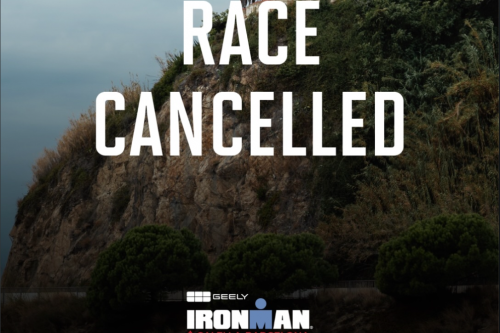
Ironman Barcelona has been cancelled.
Suddenly all those early mornings, long rides, long runs, swim sessions, the careful eating, the weekends built around training and all the sacrifices you’ve made over the last six, nine or twelve months can feel as though they’ve been for nothing.
And it’s completely understandable to feel disappointed. Angry, frustrated, even a little lost.
You’ve spent months working towards one day, one finish line, and now that finish line has gone.
But there’s something important to remember.
The race may have been cancelled. Your training hasn’t.
Your body doesn’t know that the race has been cancelled.
It still knows the miles you’ve ridden.
It still knows the hours you’ve spent swimming.
It still knows the long runs.
It still knows the strength work, the recovery, the consistency and all the weeks when training didn’t feel easy, but you did it anyway.
This is where I think we need to separate the event from what the training has actually given you.
The finish line, the medal and the race-day memories are the things you were working towards.
But underneath all of that, you’ve spent months building a fitter, stronger and more durable athlete.
That doesn’t suddenly disappear because you didn’t get to start the race.
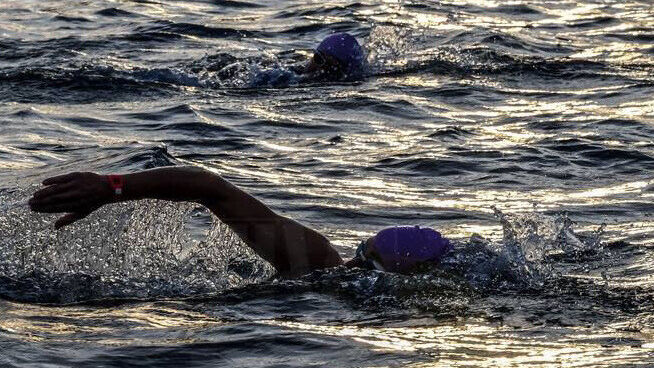
So, what have you actually built?
A lot more than you might realise.
Months of Ironman training have created huge changes in your aerobic fitness. Your body has become better at producing energy, delivering oxygen to the working muscles and handling long periods of exercise. Your muscles, tendons, bones and connective tissues have also had to adapt to the repeated loading that comes with long-distance training.
In simple terms, you've built an engine.
But just as importantly, you've built the ability to keep that engine running for a long time, and that durability is of great value.
And it’s one of the reasons I wouldn't look at your TrainingPeaks chart and think, “Well, the race didn't happen, so none of this matters anymore.”
It matters.
The training load you've accumulated is proof of months of consistent work and the capacity you've built along the way. Your fitness hasn't suddenly vanished because the start line did.
There is a strange upside to all of this.
You may have built some of the fitness required for an Ironman without having to put your body through the enormous stress of racing one.
That doesn't mean you should immediately go out and try to prove what you're capable of.
It means you have options.
And that’s the important bit.
The other challenge you've been given
There’s also a mental side to this.
When you train for an Ironman, you spend months preparing yourself for the fact that things won't always go to plan on race day.
Maybe your nutrition doesn't work.
Maybe the weather turns.
Maybe something goes wrong on the bike.
Maybe your legs aren't having the day you hoped for.
You don't get to control everything.
The same is true here.
You’ve been handed a pretty big problem before you've even reached the start line.
So now the question becomes:
What are you going to do with it?
You could quite reasonably be angry and disappointed.
You probably should be for a while.
But eventually, there comes a point where you have to look at where you are now and decide what happens next.
So, what do you do now?
There isn't one correct answer.
It depends on you.
Maybe you pivot to another race
Physically you should hopefully be in a good place, you've completed your taper and you're still motivated to race.
In that case, another marathon, 70.3 or suitable endurance event could give you somewhere to take all that training.
You might need to adjust the training slightly depending on what you choose, but you aren't starting from scratch. You've already done a huge amount of work.
You could create your own challenge
You don't necessarily need a timing chip, an M-dot finish line or somebody handing you a medal to prove what you've built.
- A long bike ride.
- A marathon.
- A big local endurance day.
Something that means something to you.
It might not replace Barcelona, and I don't think it needs to.
But it could give you the opportunity to put all that training to use and, perhaps more importantly, give you some sense of closure after everything you've invested.
Or perhaps the best option is to stop
You don't have to find another race.
You don't have to prove that the training was worthwhile by immediately finding something else to chase.
Maybe you're physically tired.
Maybe you're mentally drained.
Maybe this cancellation has taken the wind out of your sails.
That's okay too.
You've earned the right to step back.
Use the fitness you've built. Recover properly. Work on your strength and mobility. Give yourself some space.
Then decide what comes next when you're ready.
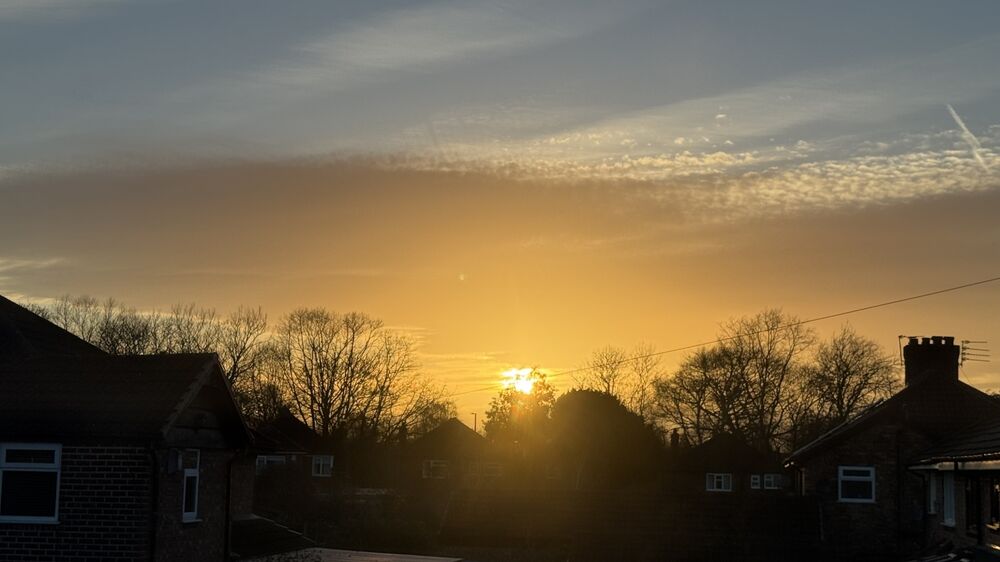
Your race was cancelled. Your progress wasn't.
This is probably the biggest thing I'd want an athlete in this situation to hear.
Training for an Ironman isn't just about the day itself.
It's about who you become during the months leading up to it.
- You've learned how to be consistent.
- You've learned how to train when you're tired.
- You've learned how to balance training with work, family and everything else life throws at you.
- You've built fitness.
- You've built resilience.
- You've probably learned things about yourself that you didn't know when you started.
None of that gets taken away by a cancellation.
The race has gone.
The athlete you've built is still there.
Yes, give yourself a few days to be disappointed.
You don't need to pretend you're fine when you're not.
Then take a step back.
Look at the training you've completed. Look at where your fitness is now. Think about how you're feeling physically and mentally.
And then ask yourself a different question.
Not:
“What have I lost?”
But:
“What have I built, and where could I take it next?”
Because you haven't wasted those months.
You've created something.
Now it's simply a case of deciding what comes next.
A final thought from me as a coach
This is also a good example of why I don't believe coaching should ever be about blindly following a plan.
A plan is there to give you direction.
But life, training, racing and circumstances don't always follow the plan.
Good coaching is about knowing when to adapt.
Sometimes that means pushing forward.
Sometimes it means changing the goal.
And sometimes it means accepting that the smartest thing you can do is step back, recover and start again.
*“The goal might have changed. That doesn't mean the journey was wasted.”*
What happens next?
If you’ve had a race cancelled and you’re not sure what to do with the training you’ve built, you don’t have to work it all out on your own.
Whether you’re looking for another race, thinking about a different goal, or simply trying to work out when it’s time to step back and recover, I can help you make sense of where you are now and what the next step could look like.
Not sure where to go from here? Get in touch and let’s have a chat.