
posted 24th February 2026
By Jon Shaw, Ironman Certified Coach, ESCI Certified Coach Your Coach page
It usually starts with a surge of misplaced late-night confidence. Maybe you saw a documentary, maybe a friend finished a race and looked annoyingly glowing in their post-race photo, or maybe you just had one too many IPAs and decided that this year is the year you finally "do something big."
You click "Register." You pay the entry fee. And then, the cold, hard reality of the calendar hits you. You look at the date of the race, look at your current running shoes, and ask the question that has haunted every amateur since Pheidippides: "How long is this actually going to take?"
If you search the corners of the internet, you will find "Fast-Track" plans promising to get you marathon-ready in 8 weeks. But if you talk to any seasoned coach, physical therapist, or veteran runner, they will give you the same, steady answer: The sweet spot for marathon training is 16 to 22 weeks.
In a world of instant gratification, four to five months feels like an eternity. But there is a profound, biological reason why you cannot—and should not—cram for a marathon in 8 weeks.
The "Cramming" Myth: Why Your Lungs Are Liars
The biggest reason amateurs try to shorten the training cycle is a fundamental misunderstanding of how the human body adapts to stress.
About four weeks into a "cram" program, you’ll actually feel pretty good. Your cardiovascular system (heart and lungs) is incredibly plastic. It adapts fast. Your resting heart rate drops, your VO2 max begins to climb, and you stop huffing and puffing on your 5-mile local loops. You think, "I've got this. If I feel this good after a month, I can definitely double my mileage by next week."
This is a trap. While your heart and lungs are ready to go, your musculoskeletal system (tendons, ligaments, and bones) is still back at the starting line, wondering what just happened.
The Science of "Body Hardening"
Your blood supply to your muscles is massive, which is why they repair quickly. However, tendons and ligaments have a much lower blood supply. They are slow-to-adapt tissues. While your lungs can get "fit" in a month, your connective tissues and bone density require months of repetitive, low-intensity impact to "harden" against the force of a marathon.
Running a marathon involves approximately 30,000 to 50,000 steps. If your structural "framework" hasn't been hardened by a 16-week progression, those steps become 50,000 tiny hammers chipping away at your shins, knees, and hips.

The Anatomy of a 16–20 Week Plan
A professional-grade marathon plan isn't just a random list of runs. It is a carefully planned sequence of physiological phases. To understand why you need 16 weeks, you must look at what happens in each block.
Phase 1: The Base Build (Weeks 1–4)
The Goal: Establishing a routine and waking up the stabilising muscles.
This phase is about consistency. You aren't worried about speed yet. You are simply teaching your body to handle running 3 to 4 days a week. You’re building the habit and ensuring your shoes aren’t giving you blisters.
Phase 2: Strength & Structural Adaptation (Weeks 5–10)
The Goal: Increasing the "Long Run" and introducing "Time on Feet."
This is where the real "hardening" happens. You slowly creep your long run from 8 miles to 10, then 12, then 14. Jumping from 8 to 14 in two weeks is a recipe for a stress fracture. A 16-week plan allows for a "down week" every third or fourth week—a crucial period where mileage drops so your body can repair the micro-damage.
Phase 3: The Specificity/Peak Block (Weeks 11–14)
The Goal: Hitting your highest mileage and your longest runs (18–22 miles).
This is the psychological crucible. You are learning to run on tired legs. These weeks teach your body to burn fat more efficiently and help you "callus" your mind for the dark moments of the race.
Phase 4: The Taper (Weeks 15–16)
The Goal: Recovery and glycogen loading.
You cannot skip the taper. It takes 14 to 21 days for your muscle enzymes to return to normal levels and for your muscle fibres to fully repair from the peak block.
The "10% Rule": A Guide to Reducing Injury Risk
If you try to condense training into 8 weeks, you inevitably violate the 10% Rule. The 10% Rule is a golden guideline in running: Never increase your weekly mileage by more than 10% from the previous week.
The Maths Problem:
If you start at 15 miles per week and need to get to a 40-mile peak week:
- 16-Week Plan: You add roughly 1.5 to 2 miles per week. This is manageable for your tendons.
- 8-Week Plan: You have to add nearly 4 to 5 miles per week. This is where "Runner’s Knee" and "Shin Splints" are born.
An injured runner on the couch can’t finish a marathon. A "slow" runner who stayed healthy for 16 weeks can.
Why a Professional Coach Changes the Game
If you are an amateur athlete, the marathon is a massive undertaking. Respecting the distance means respecting the time it takes to prepare. While you can download a random PDF online, those plans don't know your history, your injury prone-spots, or your life & work schedule.
This is where personalised coaching becomes your most valuable asset. A coach provides:
- Objective Restraint: A coach tells you when to slow down so you don't burn out before Mile 1.
- Adjustability: Life happens. If you get sick in Week 6, a coach adjusts the timeline so you don't panic and "cram" missed miles.
- Biomechanical Feedback: Ensuring your form isn't putting unnecessary stress on those slow-to-heal tendons.
The "Life Factor"
Professional runners have a team. They have massage therapists, chefs, and the ability to sleep 10 hours a day. You have a job, a family, and social obligations. A 16-to-20-week timeline provides a strategic buffer. It allows you to be human.
Summary: Respect the Journey
If you want to finish your marathon with a smile rather than on a stretcher, you need to play the long game.
- 16 Weeks: The standard for those with a decent base.
- 20 - 22 Weeks: The ideal for true beginners or those prone to injury.
- 8 Weeks: A recipe for a "Did Not Start" (DNS).
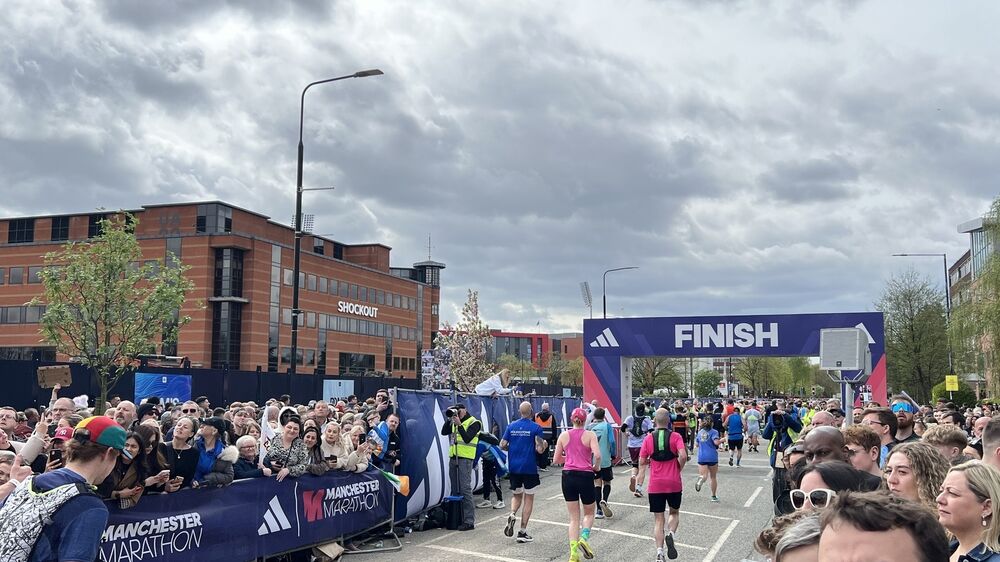
Don't rush the process. Your tendons will thank you, your finish-line photo will look better, and you’ll actually enjoy the experience rather than just surviving it.
Take the Guesswork Out of Your 26.2
Stop wondering if you're doing too much or too little. Whether you're aiming for a Boston Qualifier or just want to finish your first marathon upright, I can help you build a custom, science-backed plan that fits your life.
Ready to start your 16-week journey? [Click here to book a free 15-minute consultation and let's get you to the starting line healthy.]Contact Us page